Learn
Cider culture
Every cider country has built a room to drink it in, a vessel to drink it from and a season to make a fuss of — and almost none of them resemble each other.
Described in full
- What kind of map this is
- Deliberately schematic. Three blocks stand for the Americas, Europe and Africa, and Asia and Oceania. Two dashed bands mark the northern and southern temperate belts, separated by the equator.
- The point of the drawing
- Cider is a temperate-climate drink. Almost every significant tradition sits inside one of the two belts, because apples need winter chilling to crop and lose acid in heat.
- The Americas, north
- Quebec, for ice cider made by concentrating juice in winter cold. New England, with a documented colonial cider culture and a modern revival. The Pacific Northwest, now among the largest cider-producing areas outside Europe.
- Europe, north
- England, France, Germany and Spain — the four historic European traditions, each with its own fruit classification, its own sweetness terms and its own idea of what cider should taste like.
- Asia, north
- Japan, where apple growing in Aomori and Nagano supports a small but established cider sector working largely with dessert fruit.
- The southern belt
- Chile; South Africa, in the Western Cape; Tasmania and mainland Australia; and New Zealand. All are recent by European standards and all harvest in the southern autumn, roughly February to June.
- Why the southern belt is thinner
- Not climate but history. The southern temperate zone has less land, and cider arrived there with settlers rather than growing out of a local tradition, so the plantings are younger and the fruit is mostly dessert rather than purpose-bred cider fruit.
- What is not shown
- Scale, coastline, and the many countries with small or emerging production. A country absent from the drawing is not a country without cider.
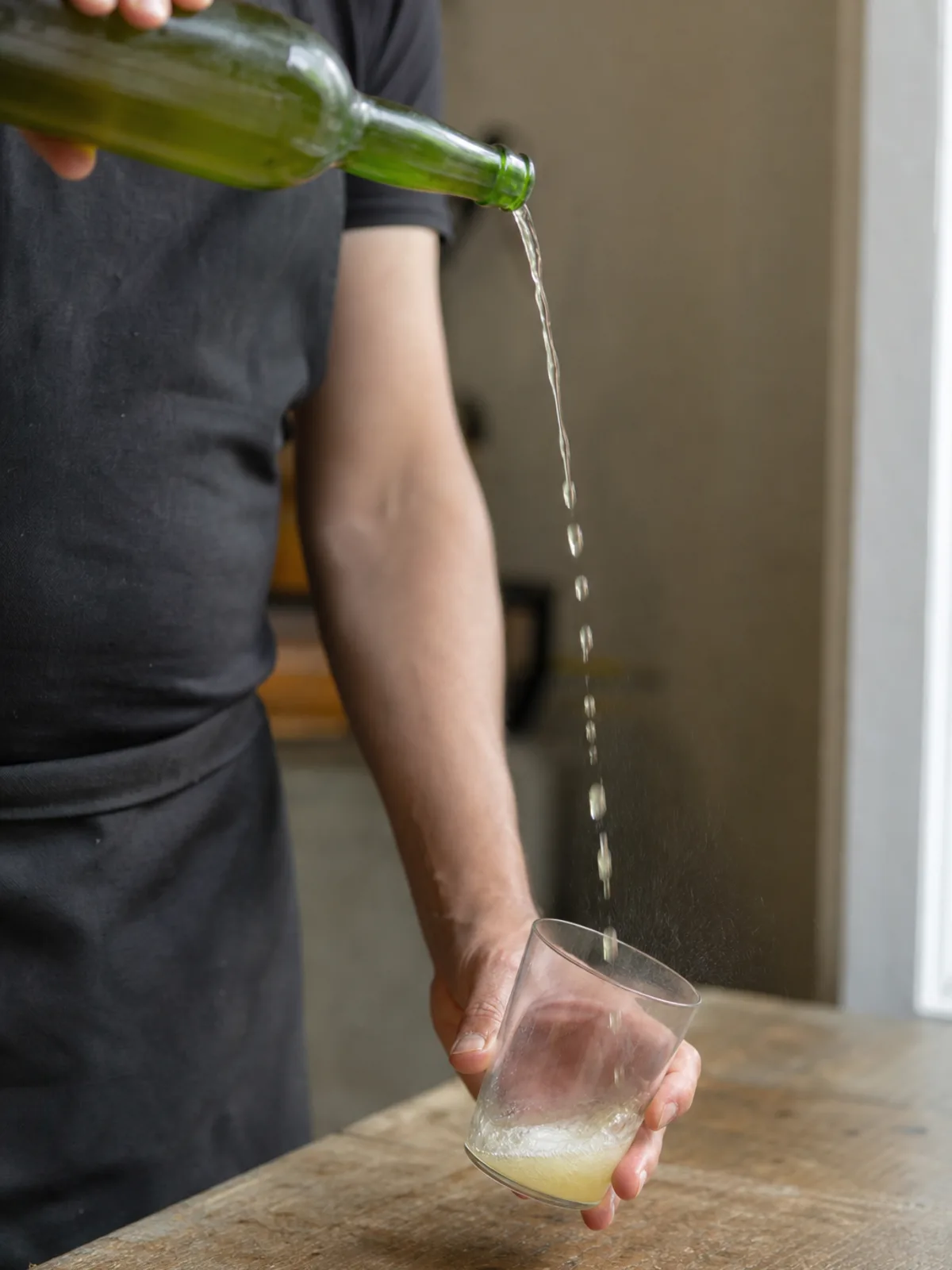
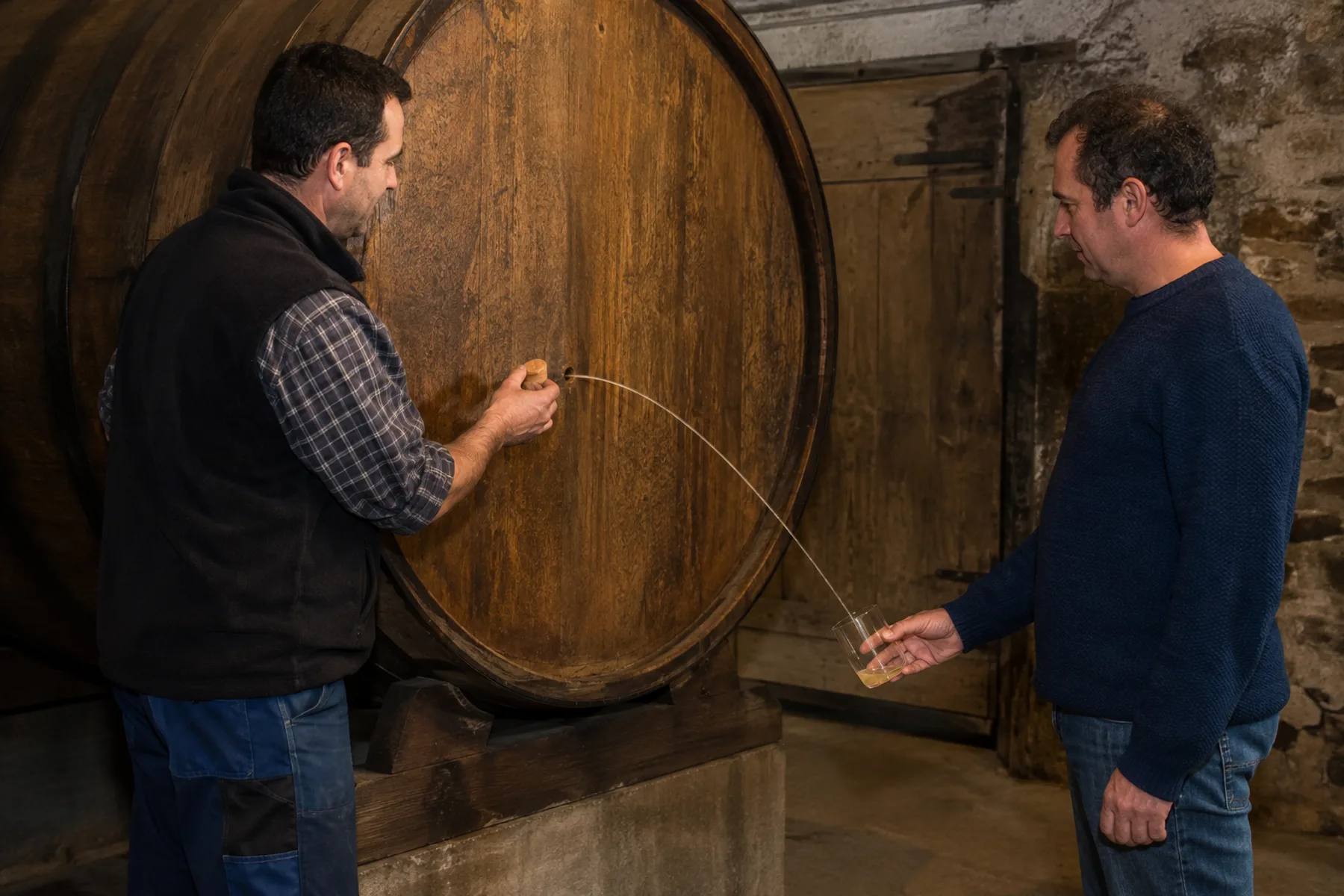
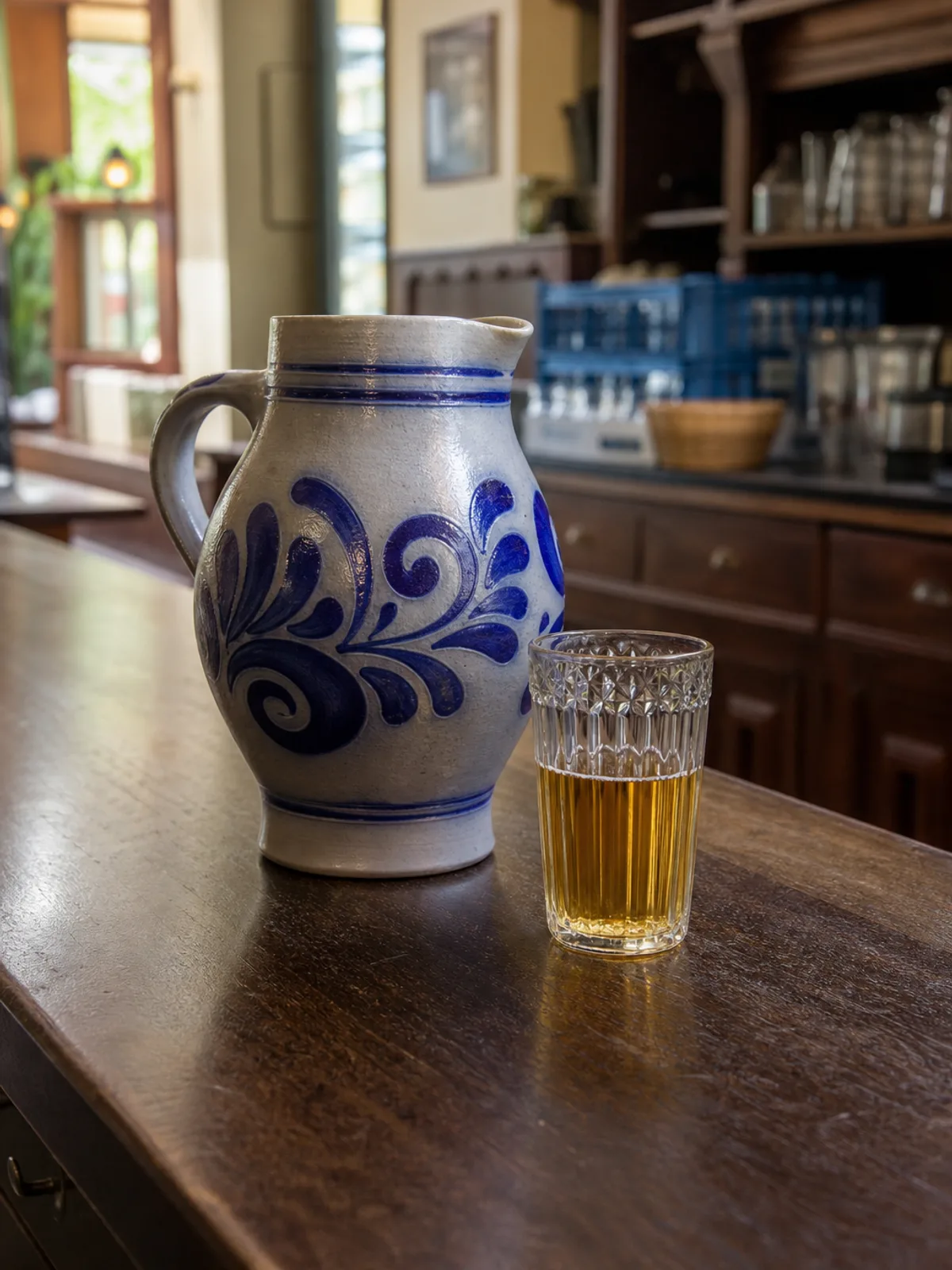
Cider is one of the few drinks whose customs are still functional rather than ceremonial. The Asturian long pour is not a performance for tourists: it aerates a still, unfiltered cider that would taste flat and hard without it, and the small measure it produces has to be drunk immediately, which is why the glass is passed round. The Frankfurt Bembel is a serving jug shaped by what it holds. The Basque txotx is a way of selling cider straight from the barrel it was made in.
The same is true of the calendar. Wassailing survives because someone kept doing it, and what it means now is not what it meant in the seventeenth century — a distinction these pages keep, along with the difference between a custom with a documented history and one revived in living memory.
For how these customs came about see the history of cider; for the drinks themselves see cider styles and regions.
The cider year
Customs tied to a date: what is done, when, and how much of it is as old as it is said to be.
The origins of wassailing
What the documentary record establishes about the age of orchard wassailing, what is asserted about its pre-Christian ancestry, and how the two came to be confused.
Wassailing
A midwinter orchard custom in which people gather at an apple tree, salute it with noise, song and cider, and place cider-soaked bread in its branches.
Apple Day
An autumn observance founded in England in 1990 to connect apple varieties with local distinctiveness, now marked annually on and around 21 October.
Harvest custom in cider country
The customs attached to picking, hauling and pressing in orchard districts, including the cider allowance that formed part of agricultural wages.
The cider year
How the working calendar of an orchard and press house is organised, and where the customs attached to it fall within it.
Places cider is drunk
The room each tradition built for the purpose, and the rules that operate inside it.
The Asturian sidrería
The cider house of Asturias: an urban and village institution built around bottled sidra natural, a poured measure, shared glasses and a settled repertoire of food.
The Basque sagardotegi
The Basque cider house: a production site that opens to the public in season, serving cider drawn from its own barrels alongside a fixed menu.
Txotx
The Basque custom of drawing cider directly from the barrel at a call, and the January-to-April season built around it.
Farmhouse cider as a social system
What farm-made cider meant as an institution: who made it, who drank it, what it was for, and what the phrase means now that the system has gone.
Serving from the barrel in the West Country
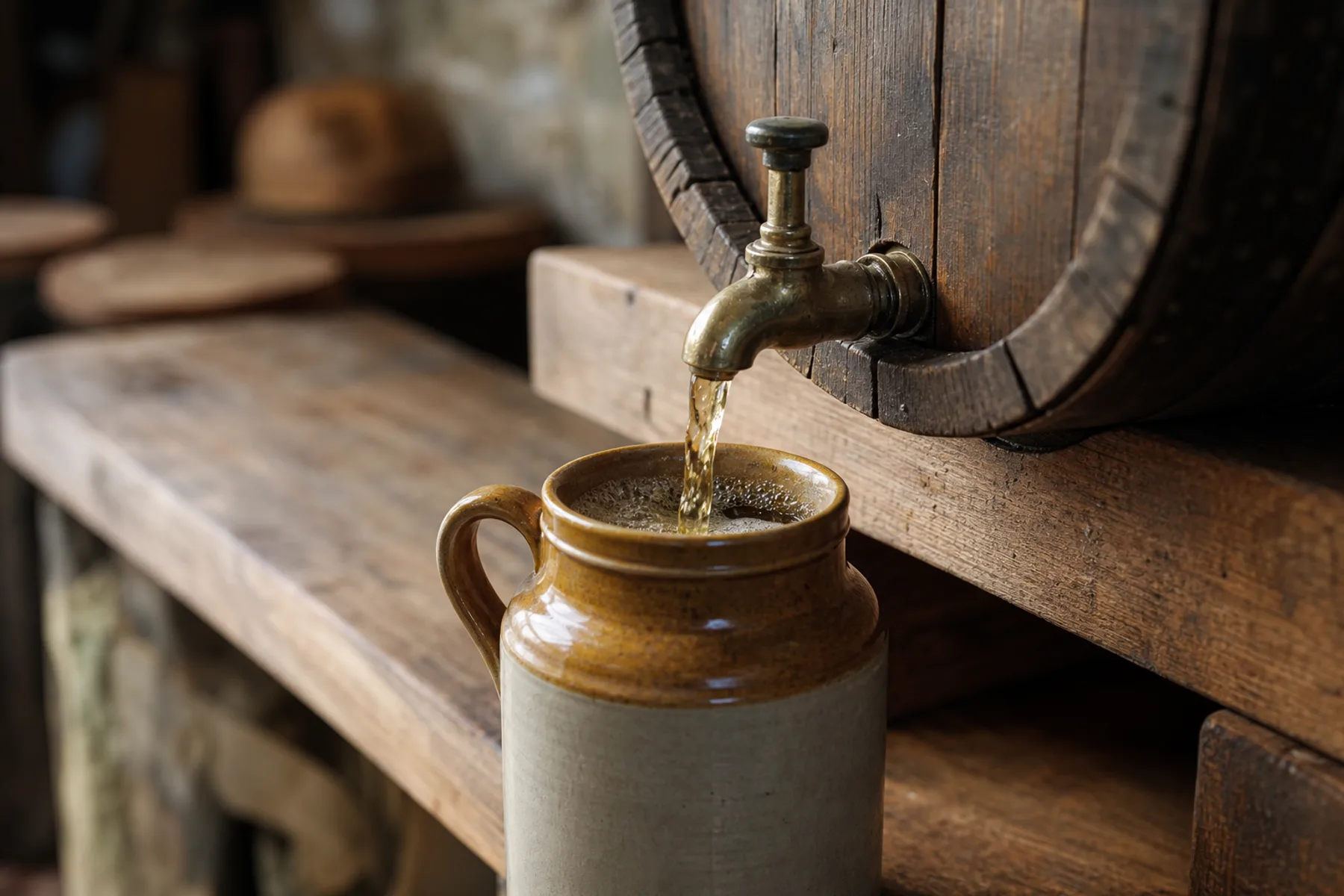
How cask cider is drawn, kept and served in the English West Country tradition, and why gravity dispense produces a different drink from the same cider in a keg.
The English cider house
A rural drinking place selling cider and little else, often part of a working farm, and now reduced to a handful of survivors.
The Frankfurt Apfelwein house
The Apfelweinwirtschaft of Frankfurt and Hessen: a tavern serving apple wine from a stoneware jug into ribbed glasses, with its own food, vocabulary and signalling customs.
The llagar
The Asturian press house: at once a piece of equipment, a building, a business and the setting for the espicha.
The Norman ferme cidricole
The farm-based cider holding of Normandy and its neighbouring regions: orchard, press, cellar, distillery and, frequently, a room where the produce is sold.
The American cider taproom
The taproom attached to a North American cidery: a licensing category, a sales channel and a social form borrowed largely from craft brewing.
The Austrian Mostheuriger
The seasonal farm tavern of the Mostviertel and neighbouring Austrian districts, licensed to serve the holding’s own Most with cold food.
Pouring and serving
How the cider gets from the vessel into the glass, and why each tradition does it the way it does.
Escanciar: the Asturian long pour
The Asturian technique of pouring cider from arm’s length above the head into a glass held low, what it does to the drink, and the etiquette around the measure it produces.
Cidre bouché: cork, cage and bottle
The corked and caged bottle of French cider, what the closure implies about how the cider was made, and the service conventions attached to it.
The Bembel and the Geripptes
The stoneware jug and the ribbed glass of Hessian Apfelwein service, what each is for, and why the ribs exist.
What people drink out of
Glass, horn, pottery and pewter — vessels shaped by what they held and how it was served.
Cider glasses through history
What cider has been drunk from in England over four centuries, from horn and pottery to the eighteenth-century engraved cider flute and the modern half-pint.
Costrels, horn cups and harvest jars
The vessels that carried cider to the field: wooden and stoneware costrels, horn beakers, and the large jars in which the daily allowance was fetched.
The Asturian cider glass
The wide, thin-walled, unstemmed vaso of Asturian cider service, and why every feature of it follows from the long pour.
The cider flagon
The large take-home container of British cider — stoneware, then glass, then plastic — and how it came to carry a social meaning of its own.
The modern cider glassware question
Why cider has no settled glass, what is actually known about how vessel shape affects perception, and what the competing options are doing.
Orchards as shared ground
The orchard as landscape, as habitat and as something communities organise around.
The traditional orchard as landscape and habitat
Widely spaced standard trees over grazed or mown grass: a farming arrangement that turned out to be one of the richest wildlife habitats in lowland Europe.
Community orchards
Orchards held and worked collectively rather than commercially, and the movement that propagated them from the 1990s onwards.
Orchard conservation as a social movement
How the loss of traditional orchards became an organised cause in Britain and Europe, who does the work, and what has actually changed.
Orchard tools as material culture
The tool list for a traditional orchard is short, simple and mostly locally made, and what survives of it in collections is systematically skewed towards the large and the impressive.
Orchards in place names
Apples, pears and orchards embedded in the names of settlements and fields across the European cider regions, and what those names do and do not prove.
Words and names
What cider country calls things, and what the names record about the places that coined them.
The naming of perry pears
Parish names, huffcaps, and a group of varieties named frankly for what drinking them was reputed to do — the most vivid nomenclature in the cider world.
What “scrumpy” means
An English dialect word for rough farm cider with no fixed definition, an uncertain etymology, and a marketing life that has detached it from both.
Why cider apples are named after farms, parishes and people
The naming of cider fruit records how it spread: by grafting between neighbours, so that a name preserves a place, a farm or the person who noticed the tree.
Cider words in Norman and Breton
Two languages of the French cider country, one of which inherited its words for the apple and borrowed its word for the drink — and what that borrowing tells you about how cider travelled.
Regional cider vocabulary
The working words of cider making in each tradition — for the pomace, the press, the vessel, the pour — and what the differences between them reveal.
Cider in song and print
How the drink has been written about, and how much of the writing is evidence.
Cider in folk song and folk tradition
What the collected song record actually contains about cider, how much of it was shaped by its collectors, and what the twentieth century added.
Cider in literature
From a Latinate eighteenth-century georgic through Hardy’s orchards to a mid-century memoir, and what cider is usually doing when a writer reaches for it.
Cider in visual art and photography
Cider is nearly absent from the painted record and abundant in the photographic one, and the reason has more to do with when cameras arrived in the countryside than with what painters found interesting.
Song in the Basque and Asturian cider house
Two singing traditions strongly associated with cider drinking, one improvised and competitive and one solo and highly ornamented, and what can honestly be said about the connection.
Everything else
Cider and class in Britain
How cider moved from a gentleman’s drink to a wage good to a byword for cheap strength, and how policy and reformulation have changed the picture again.
The modern craft cider movement
A generational shift in who makes cider, at what scale, with what vocabulary and for which audience — and the reasons it has been harder to establish than craft beer.
Traditional and modern definitions of cider
The argument over what counts as cider — juice content, added fruit and flavourings, concentrate, sweetening — and why different countries answer it differently.
Cider and national identity
In Asturias and the Basque Country cider does substantial identity work; in France it carries region within a national frame built around wine; in Britain it carries county and class rather than nation.
Cider writing and its own history
A small literature with a strange shape — a seventeenth-century burst, a two-century silence, a twentieth-century scientific record, and a revivalist literature since the 1970s — and a persistent habit of repeating claims between books without checking them.
How cider knowledge was passed on
There was no apprenticeship for cider making because there was no trade to be apprenticed to, and the competence was transmitted by working alongside somebody — which is why a break of one generation was enough to lose it.
Cider and perry festivals as a phenomenon
What cider festivals are structurally — a temporary market, a trade meeting and a judging occasion — and how the form developed.
Cider tourism and what it does to a tradition
Visitor income has become structurally important to several cider regions, and it changes what it visits: rewarding the customs that can be watched, and moving occasions from obligation between neighbours to transactions with strangers.
Offering cider: hospitality and obligation
Offering a drink from one’s own cellar was a formal act in every producing tradition — an assertion about the household, an obligation placed on the guest, and something a visitor could not straightforwardly decline.
The cider maker in a village economy
For most of the drink’s history there was no such occupation as cider maker; there were farmers who made cider, and a travelling tradesman who brought a mill and a press to farms that had neither.
The competition circuit as an institution
A largely voluntary structure of entries, panels and awards that functions as the sector’s professional apparatus — where standards are argued, reputations made, and a dispersed set of very small businesses behaves like an industry.
Next
- The history of cider — where these customs came from, and which of them are older than they look.
- Serving cider — temperature, glassware and pouring, treated as a practical question.
- Regions — the traditions in the places that made them.