Making
How cider is made
Cider making is a sequence of decisions, not a recipe. Each one narrows what the next can be, and the same fruit can be turned into drinks that share almost nothing.
Described in full
- Shape
- A single chain of nine stages running top to bottom, each an arrow to the next. A short branch to the right of each stage names what is set, added or removed there.
- Orchard
- The cultivar mix is chosen years before any juice exists. It fixes the acid, tannin and sugar the fruit can supply, and no later stage can put back what was not planted.
- Harvest and milling
- Harvest is governed by ripeness rather than the calendar. Milling breaks the fruit into pomace, which is the point at which tannin becomes extractable and oxidation begins.
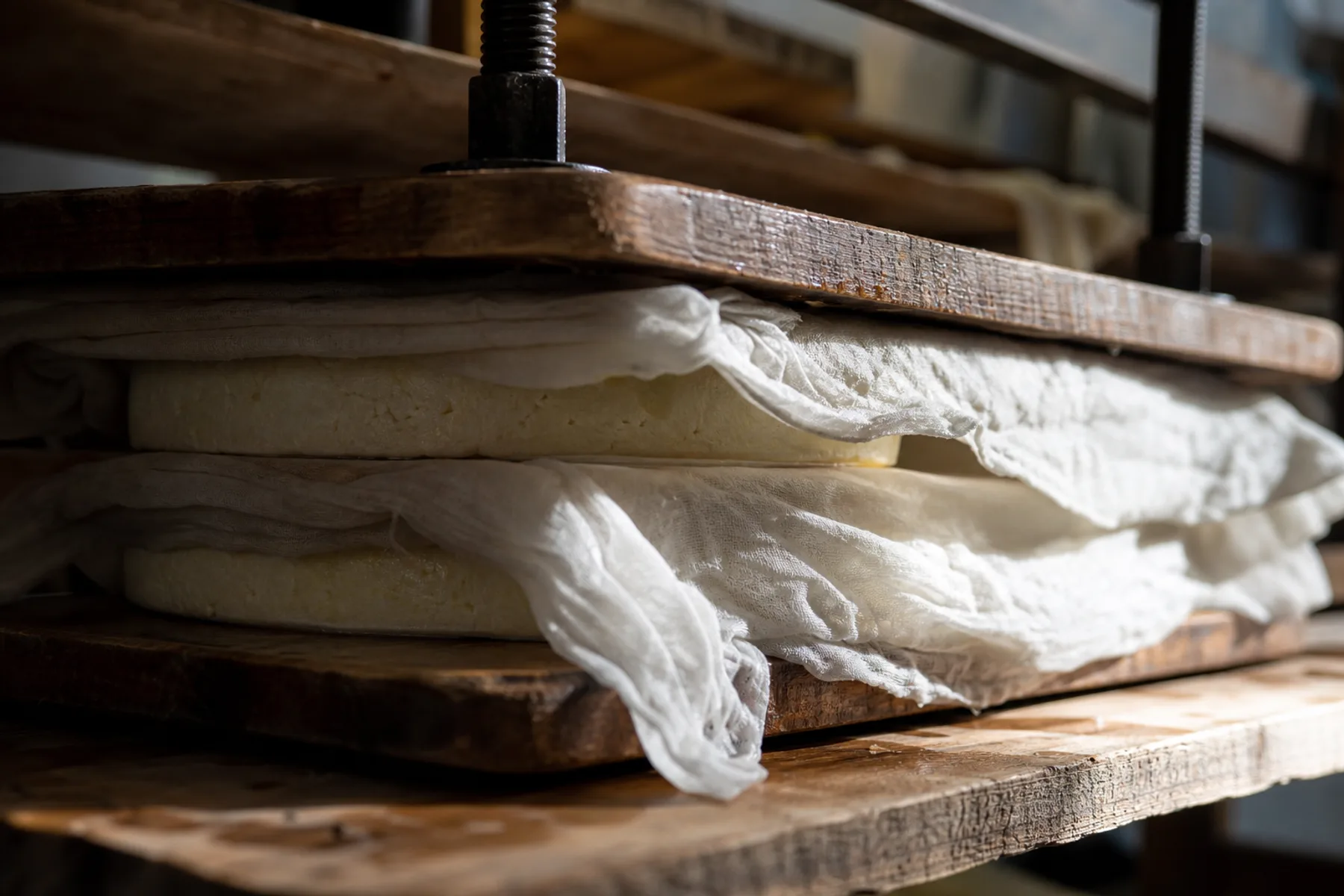
- Pressing
- Juice is separated from pomace. The spent pomace leaves the chain here; it goes to stock feed, compost or, occasionally, a second pressing.
- Juice treatment
- The window between press and ferment. Sulphite may be added, the juice may be settled or clarified, and any acid or nutrient correction is made now rather than later.
- Fermentation
- Sugar becomes ethanol and carbon dioxide, and the gas leaves the vessel. This is where most of the aroma of the finished drink is made or lost.
- Maturation and blending
- Lees are racked off during maturation; blending then combines separate batches until acid, tannin and sweetness reach the intended balance.
- Packaging
- Filling and closing. Closure choice is a pressure decision as much as a presentation one, because a bottle-conditioned cider will keep generating gas after it is sealed.
CiderHQ describes 119 distinct methods across 13 stages. Very few of them are compulsory. Milling and pressing aside, almost every step below is a choice somebody made — to add sulphite or not, to ferment on the wild population or on a pitched strain, to stop a ferment early or let it run dry — and each of those choices closes some doors and opens others.
Traditions diverge at almost every one of those points, and the English sequence is not the default one. A Norman maker keeves the juice to starve the ferment and keep it sweet; an Asturian maker ferments in chestnut and expects the acetic edge that comes with it; a Basque maker leaves the cider still and pours it from a height; a Frankfurt maker works with fruit whose sharpness would be corrected out of a Somerset blend. None of these is a variant of the others, and calling any of them ‘proper’ cider is a claim about where the writer lives rather than about the drink.
It is also worth saying plainly, because it runs against how cider is usually talked about: fermentation does more to the finished drink than the fruit does. Variety choice matters, and this site devotes hundreds of pages to it — but temperature, nitrogen, yeast population and how long the cider sits on its lees move the result further than swapping one bittersweet for another. Fruit sets the raw material; the ferment decides what becomes of it.
The steps before the press are covered under orchards, the vessels and tools they need under equipment, and the chemistry and microbiology they rest on under cider science.
These pages set out what each method is and what it does. They are not procedures to follow: dosages, temperatures and hold times are food-safety decisions that depend on the juice in front of you and on the rules where you are, and the right figures come from your supplier’s or regulator’s guidance rather than from a general reference.
If you are looking for the order to do things in rather than what each thing is, your first batch of cider is the pathway version, and the guides cover planning, measuring, perry, carbonation and diagnosing a batch that has gone wrong.
Orchard
Growing and managing the fruit before it is picked.
Orchard biodiversity management
Managing an orchard for the deadwood, veteran trees and old grassland that make traditional orchards a recognised priority habitat, and confronting what that costs in fruit.
Pollination management
Arranging compatible flowering partners and the insects to move pollen between them, without which a self-incompatible apple orchard sets little or no fruit.
Pruning
The recurring cut made on a cropping tree to keep light in the canopy, renew fruiting wood, hold the balance between growth and fruit, and take out disease and deadwood.
Rootstock choice
Selecting the root system a cider cultivar is grafted onto, which fixes tree size, how soon it crops, how long it lives and what soil and orchard system it will tolerate.
Site selection
Choosing the ground an orchard will stand on, weighing frost drainage, exposure, soil depth and season length decades before the first full crop is picked.
15 more methods at orchard
- Bush orchard systems
- Climate and site risk
- Flowering and frost
- Fruit thinning
- Grazing under trees
- Mistletoe management
- Orchard floor management
- Orchard nutrition
- Orchard planting
- Pest and disease management
- Replanting and orchard renewal
- Soil and drainage
- Standard orchard systems
- Training and formative pruning
- Tree spacing
Harvest
Deciding ripeness, gathering the crop and holding it before milling.
Ripeness assessment
Judging when cider fruit has converted enough starch, loosened enough on the spur and hardened enough for the store to be worth gathering.
Sweating the fruit
Deliberately heaping or storing gathered fruit so that it softens, loses water and finishes converting starch before it goes to the mill.
Safety noteFruit sorting
Taking rotten, mouldy and damaged fruit and foreign material out of the crop before it reaches the mill, which is the primary control on patulin in cider.
Safety noteFruit storage before milling
Holding a gathered crop between harvest and the mill, and managing what respiration, water loss and spoilage do to it while it waits.
Hand harvesting
Taking fruit off the tree by hand into bags and bins, so that it arrives at the store undamaged and with its stalk intact.
4 more methods at harvest
Fruit preparation
Washing, sorting and milling the fruit into pomace.
Milling
Reducing whole fruit to a pulp so that the press has cell walls it can drain, rather than intact apples it can only bruise.
Maceration
Holding milled pomace before pressing so that phenolics, aroma precursors and pectin have time to move out of the solid tissue and into the juice.
Fruit washing
Removing soil, grass, stones and surface contamination from gathered fruit, usually in a water flume, before it reaches the mill.
Safety noteEnzyme addition to pomace
Dosing pectin-degrading enzyme into milled pomace rather than into juice, to raise press yield and change how the cake drains.
Safety notePomace conditioning
Letting milled pomace stand before it goes to the press so that it drains better, presses faster and gives more juice.
Pressing
Separating juice from pomace.
Rack-and-cloth pressing
Building pomace into thin cloth-wrapped layers separated by racks, so that juice has a short path out and the stack can carry the pressure needed to force it.
Safety noteHydraulic pressing
Pressing in which a pump drives fluid against a ram, so that a small pumped pressure becomes a large, controllable and repeatable load on the pomace.
Safety noteBasket pressing
Small-batch pressing in a slatted vertical basket, where a ram or screw drives a follower down onto loose pomace and juice runs out between the staves.
Belt pressing
Continuous pressing in which enzyme-treated pomace is carried between two converging porous belts and progressively dewatered around a series of rollers.
Bladder pressing
Pressing by inflating a flexible membrane inside a drum so that the pomace is squeezed outwards against a drainage screen at low, evenly distributed pressure.
5 more methods at pressing
Juice treatment
What happens to juice between the press and the ferment.
Sulphiting
Adding sulphur dioxide to juice to suppress spoilage organisms and oxidative browning, at a level that only means anything once the juice pH is known.
Safety noteJuice oxidation
The enzymic browning that begins the moment apple juice meets air, which some traditions deliberately allow and others suppress.
Patulin control
Managing the mycotoxin produced by rot fungi in damaged apples, which is controlled by fruit selection rather than by any treatment applied to juice.
Safety noteSanitation
The cleaning and sanitising discipline that underlies every other process, and why removing soil must come before any attempt to kill organisms.
Safety noteAcid adjustment
Correcting the acidity of low-acid juice before fermentation, usually with malic acid, and the difference between the pH question and the titratable acidity question.
8 more methods at juice treatment
Fermentation
Converting sugar to alcohol, and everything that happens alongside it.
Keeving
Forming a floating pectin gel that lifts nutrients and solids out of the juice, so that the ferment starves before it finishes and leaves natural sweetness behind.
Safety noteMalolactic fermentation
A bacterial conversion of sharp malic acid into softer lactic acid, which lowers acidity, changes aroma, and in most traditional cider happens whether it was planned or not.
Wild fermentation
Letting the microflora already present on the fruit and in the press house carry the ferment, in a succession rather than as a single organism.
Fermentation temperature control
Managing the temperature at which a ferment runs, which sets not only how fast it goes but which aromatics survive it and what the finished cider tastes of.
Inoculated fermentation
Starting a ferment by pitching a chosen yeast culture so that one known strain, rather than the fruit’s resident population, does the work.
Maturation
Time, vessel and contact after the primary ferment.
Racking
Moving cider off the sediment it has thrown, which both cleans the liquid and — by taking yeast and nitrogen away with the deposit — slows what is left of the ferment.
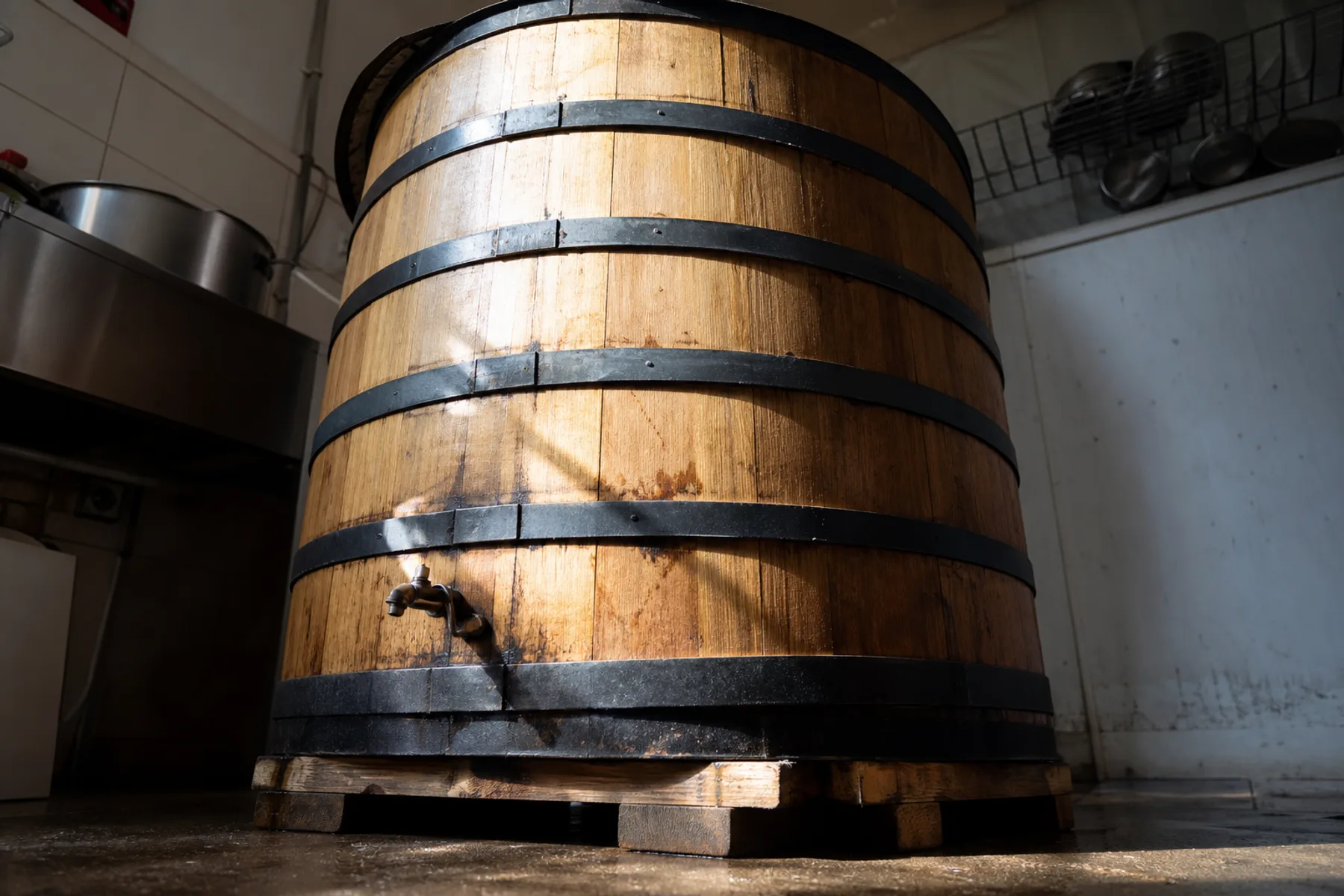
Barrel ageing
Holding cider in wood — which may mean an old neutral vat used simply as a vessel, or fresh or spirit-seasoned oak used as a source of flavour, and the two are not the same operation.
Bottle maturation
What happens to a cider after it is sealed in glass — which for most ciders is slow decline rather than improvement, and saying so is more useful than implying otherwise.
Lees ageing
Deliberately holding a cider or perry on its fine yeast deposit so that autolysing cells release material that changes texture and foam behaviour.
Tank maturation
Resting cider in stainless steel or a lined vessel, where the point of the container is that it contributes nothing and admits almost no oxygen.
3 more methods at maturation
Blending
Combining batches to reach a target.
Blending
Combining separate lots of cider or perry into one, which in cider is the historically normal way of making the drink rather than a remedy applied when single lots disappoint.
Back-sweetening
Adding sugar, juice or concentrate to a cider that has fermented dry — a straightforward adjustment that leaves the drink microbiologically unstable until something is done about it.
Safety noteAcid balancing
Bringing a cider to the sharpness it needs, which requires separating perceived sharpness from titratable acidity from pH — three related things that do not move together.
Bench blending trials
Making small measured mixtures of candidate lots and tasting them before committing tanks, because how components behave together cannot be worked out from how they taste apart.
Tannin balancing
Setting the phenolic structure of a blend, which means handling bitterness and astringency separately because they are different perceptions produced by different sizes of the same molecules.
Vintage and non-vintage blending
The choice between bottling a single season as it came and carrying stock across years to hold a house character steady, and what each choice costs.
Concentration and speciality
Methods that change what the drink is rather than refine it — freezing out water, fortifying, or adding fruit, wood, hops or spice.
Ice concentration
Freezing pressed juice and drawing off the unfrozen fraction, so that water is removed as ice and everything else in the juice is left behind more concentrated.
Safety noteFruit addition
Bringing fruit other than apple or pear into a cider as juice, purée, whole fruit or concentrate, where the timing of the addition decides whether you keep the aroma or the alcohol.
Safety noteCryoextraction
Milling and pressing fruit that has frozen on the tree or in store, so the ice stays behind in the pomace and only concentrated juice runs from the press.
Fortification
Adding distilled spirit to juice or cider so that fermentation cannot proceed, the classic route to pommeau and a step that generally takes the product outside the legal category of cider.
Hopping
Steeping hops in cold cider to extract terpene aroma without any boiling, which gives hop character with essentially none of the bitterness that hopping contributes to beer.
Safety note
2 more methods at concentration and speciality
Stabilisation
Stopping the drink changing further in the container.
Filtration
Passing cider through a porous medium to reach a stated visual brightness, at a real cost in colloidal material, body and aroma.
Pasteurisation
Heating cider enough to inactivate the organisms that would spoil it, either in the sealed package or in-line before filling, at a measurable cost in fresh aroma.
Safety noteFining
Adding a reactive agent that binds a target colloid and carries it to the bottom, chosen according to whether the problem is tannin, protein or a phenolic taste fault.
Safety noteSorbate stabilisation
Adding potassium sorbate to prevent yeast from restarting a fermentation in the package — an inhibitor rather than a killer, and one that must never be used without sulphite.
Safety noteSterile filtration
Membrane filtration at a rating that retains viable yeast and bacteria, which is what allows a sweet cider to be shelf-stable without heat or preservative — provided the filling that follows is aseptic.
3 more methods at stabilisation
Carbonation
Putting dissolved gas into the drink, or keeping it there.
Bottle conditioning
Carbonating cider by letting a second fermentation finish inside the sealed bottle, so the gas is generated where it is going to stay.
Safety noteForced carbonation
Dissolving carbon dioxide into cider under pressure to a chosen level, giving complete control of the sparkle and none of the flavour a second fermentation would contribute.
Natural carbonation
Bottling before the primary fermentation has finished, so the sugar still in the cider produces the carbonation with nothing added and nothing restarted.
Safety notePriming
Adding a measured, calculable quantity of fermentable sugar at bottling so that the fermentation which follows generates a predictable volume of carbon dioxide.
Safety noteTank conditioning
Running a second fermentation in a sealed pressure tank so the gas is generated by yeast but the sediment never reaches the bottle.
Safety note
2 more methods at carbonation
Packaging
Filling, closing and labelling.
Bottle pressure management
Matching the pressure a carbonated cider will actually generate to glass that can contain it, taking account of temperature and of any fermentable sugar left in the bottle.
Safety noteBottling
Transferring finished cider into glass, where the dominant variable is how much oxygen the liquid picks up in the few seconds it takes to fill and close each bottle.
Bag-in-box
A collapsing laminate bladder in a card outer, the standard farmgate and draught format, which keeps air out during dispense but lets oxygen through the film over weeks.
Canning
Filling cider into lined aluminium, a format that blocks light completely, seals tightly and depends entirely on an intact polymer coating between an acidic drink and the metal.
Closure selection
Choosing between cork, crown, screwcap, cage and swing-top, a decision that fixes how much oxygen reaches the cider, whether it can hold pressure, and which faults it is exposed to.
Storage
Holding the finished drink before it is opened.
Cellar storage
Holding packaged cider in conditions that let it change slowly and predictably, where stability of temperature matters more than the temperature itself.
Cold chain
Keeping an unpasteurised, unfiltered or back-sweetened cider refrigerated from the packaging hall to the point of sale, because refrigeration is the only thing holding it stable.
Safety noteShelf-life management
Establishing how long a cider stays acceptable in its package and setting a durability date that reflects evidence rather than convention.
Every method
All production methods on CiderHQ, alphabetically, for when you already know the word you are looking for.
The full alphabetical list — 119 methods
- Acid adjustment
- Acid balancing
- Arrested fermentation
- Back-sweetening
- Bag-in-box
- Barrel ageing
- Basket pressing
- Belt pressing
- Bench blending trials
- Bladder pressing
- Blending
- Bottle conditioning
- Bottle maturation
- Bottle pressure management
- Bottling
- Bush orchard systems
- Canning
- Cellar storage
- Centrifugation
- Climate and site risk
- Closure selection
- Cold chain
- Cold maturation
- Cold stabilisation
- Cryoextraction
- Enzyme addition to pomace
- Fermentation monitoring
- Fermentation temperature control
- Fermentation vessels
- Filtration
- Fining
- Flowering and frost
- Forced carbonation
- Fortification
- Fruit addition
- Fruit sorting
- Fruit storage before milling
- Fruit thinning
- Fruit washing
- Gravity measurement
- Grazing under trees
- Hand harvesting
- Hopping
- Hydraulic pressing
- Ice concentration
- Inoculated fermentation
- Juice blending
- Juice clarification
- Juice oxidation
- Juice pasteurisation
- Juice settling
- Juice storage
- Keeving
- Kegging
- Labelling
- Lees ageing
- Maceration
- Malolactic fermentation
- Mechanical harvesting
- Microbial succession
- Milling
- Mistletoe management
- Natural carbonation
- Nutrient addition
- Orchard biodiversity management
- Orchard floor management
- Orchard nutrition
- Orchard planting
- Oxidative maturation
- Oxygen management in fermentation
- Pasteurisation
- Patulin control
- Pectinase treatment
- Pest and disease management
- Pollination management
- Pomace conditioning
- Pomace handling
- Pressing yield
- Priming
- Pruning
- Rack-and-cloth pressing
- Racking
- Replanting and orchard renewal
- Restarting a stuck fermentation
- Ripeness assessment
- Rootstock choice
- Sanitation
- Second pressing and watering
- Secondary fermentation
- Shaking and collecting
- Shelf-life management
- Site selection
- Soil and drainage
- Sorbate stabilisation
- Spicing
- Standard orchard systems
- Starch–iodine testing
- Sterile filtration
- Sugar addition
- Sulphite stabilisation
- Sulphiting
- Sweating the fruit
- Tank conditioning
- Tank maturation
- Tannin balancing
- Topping up
- Traditional method
- Traditional screw pressing
- Training and formative pruning
- Transfer method
- Tree spacing
- Twin-screw pressing
- Vintage and non-vintage blending
- Wild fermentation
- Windfall management
- Wood and botanical infusion
- Yeast nutrition
- Yeast rehydration
- Yeast selection
Next
- Step-by-step guides — the same material as an ordered path, for somebody with fruit in front of them rather than a question about method.
- Orchards — where the sequence really begins, and the decisions that are already made by the time the fruit reaches the mill.
- Equipment — mills, presses, vessels and measurement, and what changes with scale.
- Cider science — the compounds and organisms these methods act on.
- Troubleshooting — what goes wrong at each stage and whether it can be put right.
- Styles — the categories these sequences produce.