Cider and perry intelligence
Understand cider and perry.
What cider actually is, which apples make it and why they taste as they do, how it is pressed and fermented, what the words on the label mean, and what has gone wrong when something has. Evidence-led, international, and not trying to sell you a drink.
Four ways in
Depending on why you are here.
I want to understand it
Learn
What cider is, what perry is, why a cider apple is not an eating apple, and how to read a label in five countries that each mean something different by the same word.
I make it, or want to
Making
119 production methods from the orchard to the bottle, each with the chemistry and microbiology behind it and what it does to the finished drink.
Something is wrong
Troubleshooting
52 faults with their signs, their mechanism, their causes, and an honest answer about whether each one can be put right. Most cannot.
I want to know where it comes from
Places
72 regions across 31 countries, each written from inside its own tradition rather than as a variation on the English one.
Want to make cider?
The whole process, as an ordered path rather than a reference shelf. Fruit in at one end, bottles out at the other.
Described in full
- Shape
- A vertical spine of nine boxed stages, each with two lines of text beside it: what is measured at that stage, and beneath it what commonly goes wrong there.
- Orchard
- Measured: yield and bloom. Goes wrong: frost at blossom, and biennial bearing, both of which decide how much fruit exists before any of the rest applies.
- Harvest
- Measured: starch pattern index and flesh firmness. Goes wrong: rot and bruising, which are a food-safety question as well as a quality one because damaged fruit is where patulin-producing moulds establish.
- Milling
- Measured: particle size. Goes wrong: smearing of over-soft fruit, which blocks the press, and oxidation, which begins the moment the cells are broken.
- Pressing
- Measured: juice yield. Goes wrong: poor extraction, usually from pomace that is too fine, too coarse, or too wet.
- Juice
- Measured: specific gravity, titratable acidity, pH and assimilable nitrogen. Goes wrong: a pH too high for sulphite to work, and nitrogen too low for the ferment to finish.
- Fermentation
- Measured: gravity and temperature. Goes wrong: a stuck ferment and hydrogen sulphide, both of which are usually decided by what the juice carried rather than by what the maker did afterwards.
- Maturation
- Measured: volatile acidity and clarity. Goes wrong: acetification and surface film, both driven by oxygen reaching the surface of a partly filled vessel.
- Blending
- Measured: acid and tannin balance. Goes wrong: a blend that is flat or harsh, which is a judgement rather than a defect.
- Packaging
- Measured: dissolved carbon dioxide and bottle pressure. Goes wrong: refermentation in the container, which is the one failure on this list that can be a physical hazard.
- How to read it
- The pairing is the point. A reader who has met a symptom can find the stage it belongs to, and a reader planning a season can see which measurement each stage actually calls for. Nothing here is deterministic: a fault listed against a stage is a fault that commonly begins there, not one that can only begin there.
Start here
Your first batch of cider
Juice with no preservative, a clean vessel, an airlock. The hard parts are cleanliness and patience.
Understand it
How cider is made, start to finish
Mill, press, ferment, mature, package — and which of those are choices rather than necessities.
Measure it
What to measure, and what each number tells you
Gravity, pH, titratable acidity, sulphite. What each one detects, and how each is commonly taken wrongly.
When it goes wrong
Diagnosing a batch that has gone wrong
Pressure first, then whether it is a fault at all, then the observations that narrow it down.
All 14 guides — making, measuring, tasting, pairing, perry and diagnosis. Or the practical section for serving, storage, equipment and the questions asked most often.
Explore the cider cultures
Cider is not one drink with regional accents. These six traditions disagree about what cider is for, how it should taste and how it should be poured.
Northern Spain
Asturias
Sidra natural, poured from a height to bruise it into life, in cider houses that open when the barrel does.
Spain and France
Basque Country
Sagardotegi season and the txotx call: cider straight from the kupela, standing up, between courses.
Northern France
Normandy
Keeving, protected appellations, and a sweetness that comes from starving the ferment rather than adding sugar.
South-west England
The West Country
Farmhouse cider from bittersweet fruit, full of tannin, and the orchards and customs built around it.
Hessen, Germany
Frankfurt
Apfelwein, sharp and unsweetened, served from a Bembel in taverns with their own rules.
Western England
The Three Counties
The perry heartland — huge standard trees, fruit named after parishes, and a drink that nearly disappeared.
Cider culture — the year, the rituals, the vessels and the rooms. The history — how it got here. All 72 regions.
Understand the fruit
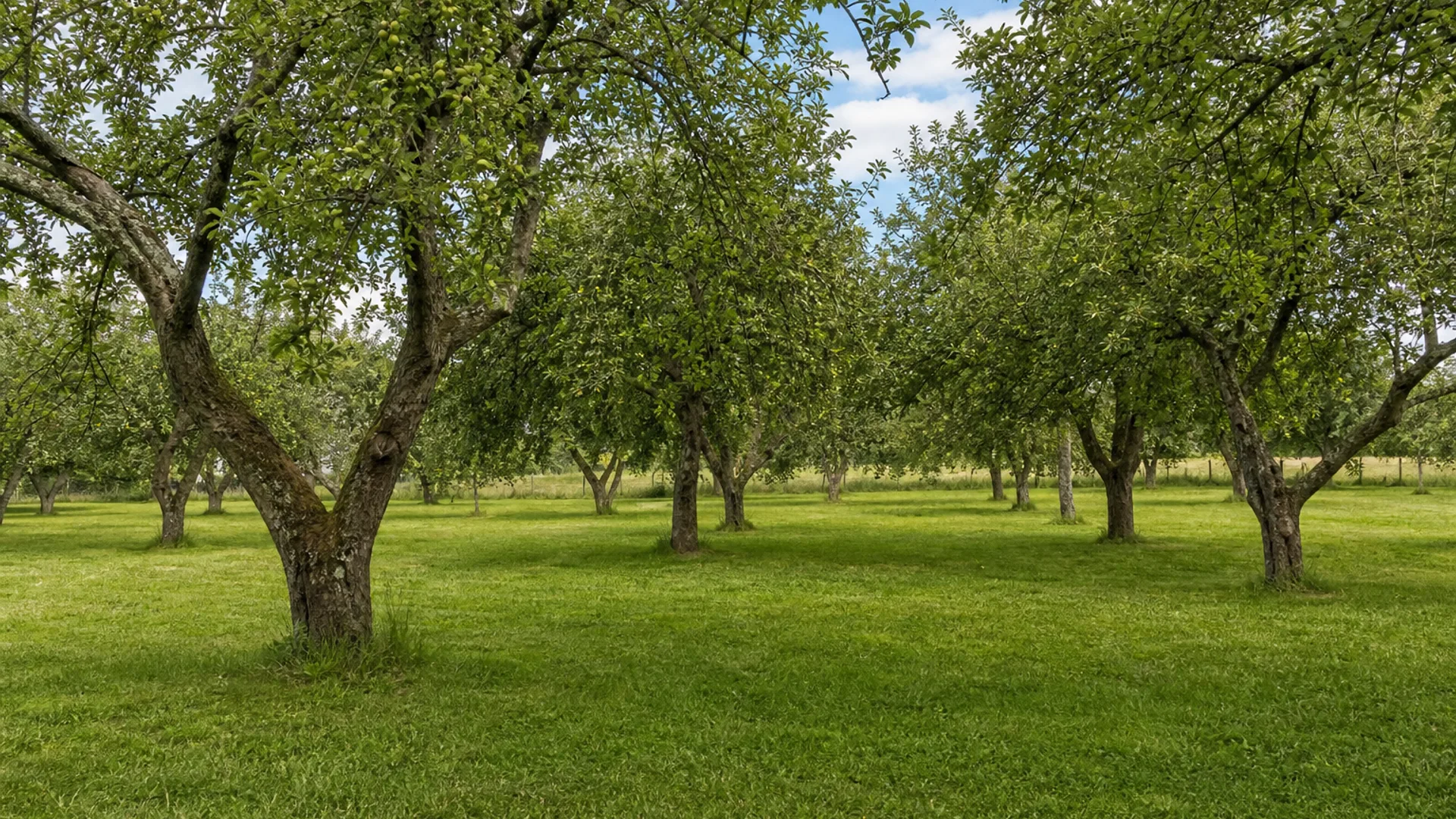
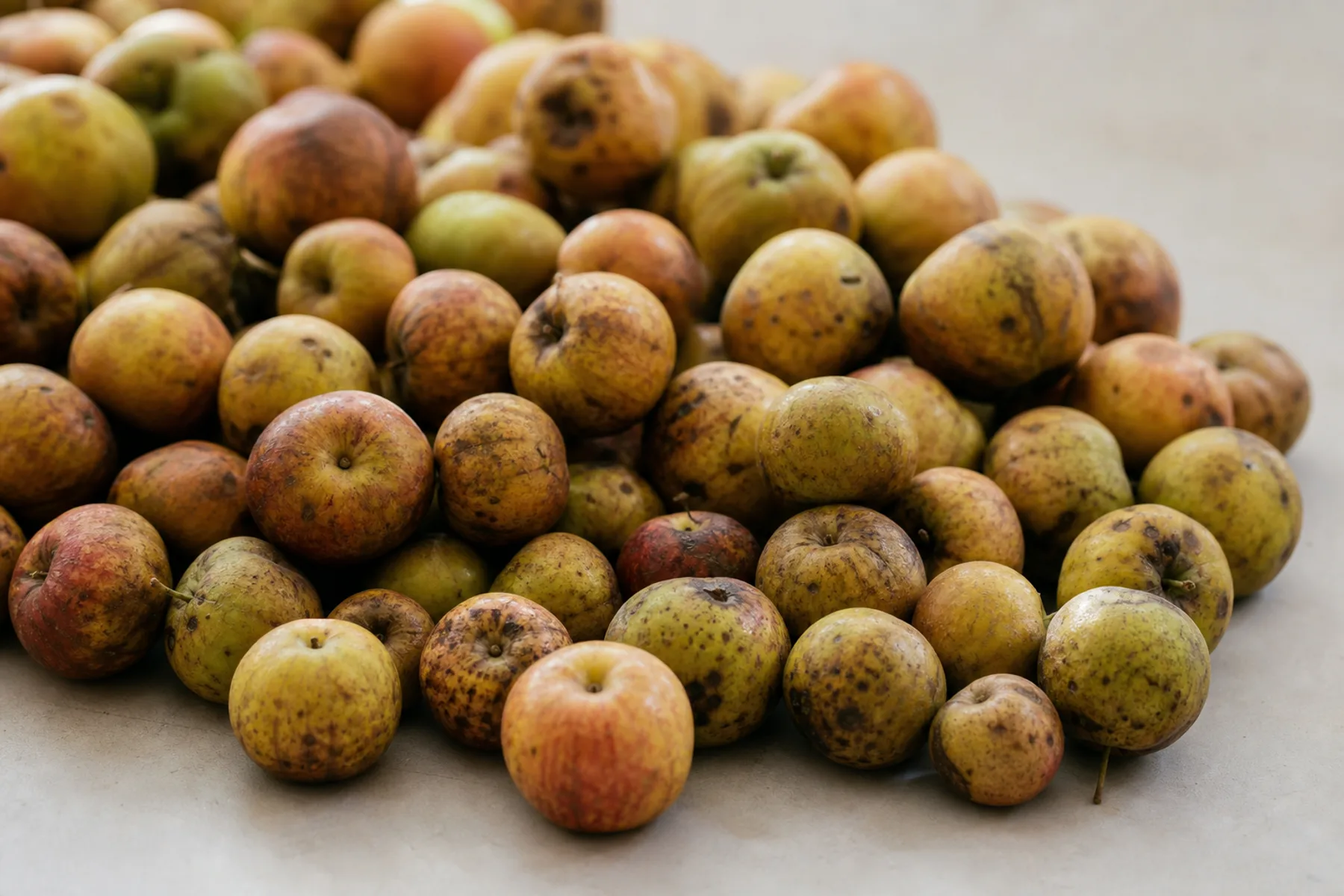
Cider apples are bred for tannin, sugar and juice rather than for eating, and most of them are close to inedible raw. Perry pears are a different fruit again.
Cider apples (300)
Bittersweet, bittersharp, sharp and sweet — the four-way classification that decides what a cultivar can do in a blend, and where it came from.
Perry pears (94)
A first-class pillar rather than a footnote. Sorbitol, citric acid and a tannin that behaves differently, on trees that outlive the people who plant them.
How the fruit is classified
The Long Ashton matrix, what the Asturian and French registers do instead, and why the same apple can be classified three ways.
The drink
Asturian sidra natural, Norman keeved cidre, West Country farmhouse cider and Frankfurt Apfelwein are four different answers to what cider should be.
Dry cider
Cider fermented out or finished so that little fermentable sugar remains, leaving acid, tannin and alcohol to carry the palate.
Medium cider
Cider carrying enough residual or added sugar to be perceptible without dominating, the commonest sweetness level in British retail.
Sweet cider
Cider in which sugar is the leading sensation, whether retained from an arrested fermentation, added after it, or produced by keeving.
Still cider
Cider with no perceptible dissolved carbon dioxide, presented as a fermented fruit drink whose texture rests on body, acid and tannin alone.
Sparkling cider
Cider carrying enough dissolved carbon dioxide to produce a persistent bubble, by bottle fermentation, tank fermentation or injection.
Bottle-conditioned cider
Cider that completes a fermentation inside its sealed bottle, generating its own carbonation and, in most cases, leaving a yeast deposit behind.
Keeved cider
Cider clarified before fermentation by a pectin gel that strips nutrients from the juice, producing a slow ferment that stops naturally with sugar still in solution.
Wild-fermented cider
Cider fermented by the yeast population already present on the fruit and in the cellar, without an added cultured strain.
Taste it, and work out what is wrong with it
Assessment rather than appreciation: an order of operations, a vocabulary where every term says what causes it, and a way back from a smell to a cause.
How to taste cider and perry
Look, smell, sip, attend to the finish — in the same order every time, because that is what makes two tastings comparable.
The sensory vocabulary (138)
Thirteen structural dimensions and twenty aroma families. A descriptor that cannot say what causes it is not published.
Tasting note builder
Conditions, observations, intensity, cause. A note that is still useful a year later and to somebody who was not there. No score field.
Fault finder
Describe what you can smell and see; get the candidates in order, with what distinguishes each one from the next.
Read the science
Why the drink does what it does — and where every number on this site came from, including the ones that disagree with each other.
What fermentation does
Sugar to alcohol is the least of it. What else changes, what makes the smell, and what a stalled ferment actually is.
Tannin, bitterness, astringency
Two different sensations from one class of compound — one a taste, one a feeling — and why the classification label predicts them imperfectly.
The acids, and pH versus TA
Two numbers that are routinely confused, measuring different things, each governing a different decision.
Yeast and bacteria (39)
The organisms that do most of the work and some of the damage, in the order they arrive.
The research programmes
Long Ashton, Geneva and nine more. Who measured what, where, when, and what can honestly be compared with what.
Tools and calculators
Gravity to ABV, Brix conversion, priming sugar, bottle pressure — each saying where the number it wants comes from.
Where most people start
What CiderHQ is not
It is not a brand site, a bottle-ranking site, a producer directory or a shop. It does not tell you which cider to buy, and it publishes no health benefits for alcohol, because current guidance from major health authorities does not support them.
Producers appear where a historical, legal or technical fact requires them, and nowhere else. The point of the site is to explain the drink, not to sell it.
Every material claim carries a source, every measurement carries the place and period it was taken in, and figures from different studies and climates are shown side by side rather than averaged into one authoritative-looking number. The evidence policy explains why that matters particularly for cider fruit.
CiderHQ by the numbers
Real counts from the data, not round numbers. Every family below is a set of records with sources attached, not a page of prose about a subject.
| Family | Records | What is in it |
|---|---|---|
| Cider apples | 300 | Cultivars with their classification, blend role and — where an analysis exists — its measured figures in context. |
| Perry pears | 94 | A first-class pillar, not a footnote. Different chemistry, different trees, different problems. |
| Styles | 69 | Cider and perry categories across every significant tradition, each saying what defines it and what varies inside it. |
| Production methods | 119 | From site selection to bottling, with the mechanism behind each. |
| Guides | 14 | Ordered paths through the above, for a reader with fruit in front of them rather than a question about method. |
| Compounds | 80 | What each one does, not merely that it is present. |
| Organisms | 39 | The yeasts and bacteria that do most of the work, and some of the damage. |
| Sensory descriptors | 138 | Each one saying what causes it. A descriptor that cannot explain itself is not published. |
| Faults | 52 | Diagnosis, mechanism, prevention, and whether it can be fixed. |
| Food subjects | 136 | Pairing as sensory interaction, including the combinations that work badly. |
| Glossary terms | 422 | Every word you will meet, in five languages, each connected to the deeper page. |
| Comparisons | 68 | The differences readers actually ask about, answered before any table. |
| Sources | 115 | Registered, with what each is competent for — and the gaps where a retrieval did not happen. |
94 perry pears · 119 processes · 68 comparisons · about CiderHQ