Fruit
Cider apples
A cider apple is not an eating apple that happened to be fermented. It is a different kind of fruit, bred over centuries for tannin, for sugar and for juice — and most of them are close to inedible raw.
CiderHQ holds 288 cider apple cultivars and 90 perry pears. Each record says what the fruit contributes to a blend, where the evidence for that comes from, and — where an analysis exists — the measured figures with the place and period they were taken in.
Start with the classification if you want to understand the fruit as a system, with the blend roles if you are building one, or with the harvest calendar if you are planning a pressing season.
Described in full
- Where these months apply
- Southern and western England — Somerset, Devon, Herefordshire, Gloucestershire — which is the geography the five window names were coined in and the one almost every English harvest date on this site was recorded in. They are not universal. The same cultivar ripens on different dates in Normandy, in Asturias and in the Skagit Valley, and this chart should not be read against a harvest anywhere else without adjusting for it.
- The axis
- August to December, left to right, with month divisions marked. Each of the five harvest windows the site uses is drawn as a bar spanning the period it covers.
- Very early
- Late August into early September. Early sharps and early dessert fruit. Useful for starting a mill before the main crop, and rarely capable of a balanced cider alone.
- Early
- September. Early bittersweets, and the point at which a mill can begin pressing in earnest.
- Mid
- Late September to mid October. The main crop, and most of the traditional bittersweets. The bulk of any West Country blend is picked in this window.
- Late
- Late October. Late bittersweets, ripening as leaf fall begins and the weather turns against gathering from grass.
- Very late
- November onwards. Perry pears and the latest vintage-quality apples. Fruit here is often picked hard and held to sweat, and a wet November can lose an entire late crop.
- Why the windows overlap
- They are ripening periods for populations of trees, not fixed dates. Season, site and rootstock move a given cultivar by two or three weeks in either direction, and the same fruit is early in Herefordshire and mid in a colder year.
- Hemisphere
- These are northern-hemisphere months. Tasmanian, New Zealand and South African harvests run through the equivalent southern months, roughly February to June.
- What a cultivar page shows instead
- A cultivar record carries the window it is placed in and, where a named programme recorded one, that programme’s own observation — the mean harvest date at WSU Mount Vernon, or the ripening band the National Perry Pear Collection records at Hartpury. Those are site observations and they sometimes disagree with the window; both are kept rather than one overwriting the other, because the disagreement is a fact about where the fruit was grown.
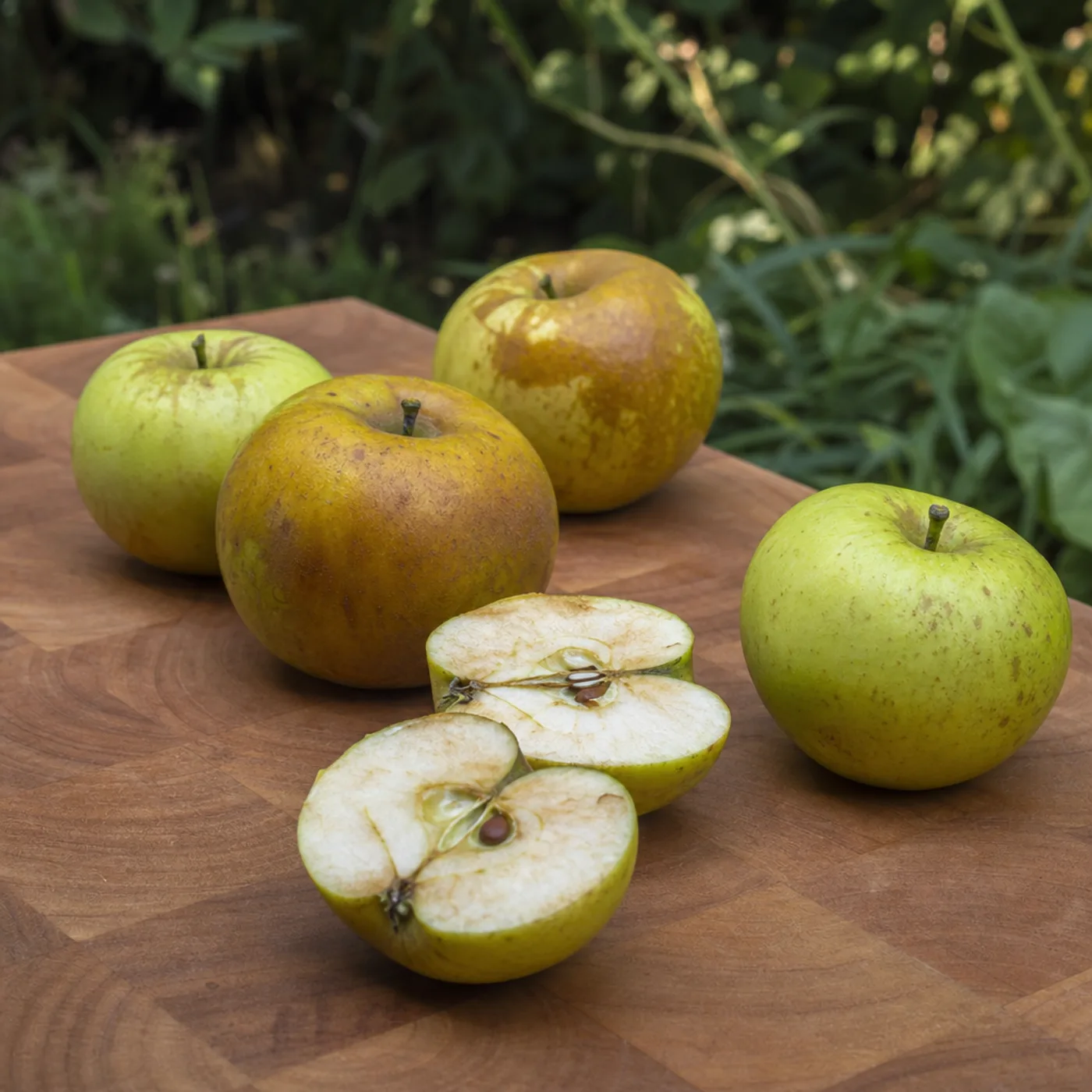
By classification
The English four-way split of cider apples by acid and tannin: sweet, sharp, bittersweet and bittersharp. The scheme most English-language cider writing uses, and the one most often mistaken for a universal standard.
The four classes below are the Long Ashton scheme, devised in Somerset for Somerset fruit. French, Spanish and North American practice sort the same apples differently, and a cultivar can cross a boundary simply by being grown somewhere warmer. How the schemes differ.
Sweet (17)
Low acid and low tannin. Fruit that contributes sugar, alcohol and body but little structure or sharpness.
Fermentable sugar and softness. A blend built only from sweet fruit ferments to something flat and, because its pH stays high, microbiologically vulnerable.
Bittersweet (64)
Low acid, high tannin. The class that has no real equivalent in dessert fruit and that defines West Country cider.
Bitterness, astringency, body and ageing capacity. Bittersweets are the backbone of traditional English blends and are close to undrinkable eaten raw.
- Dabinett
- Michelin
- Somerset Redstreak
- Tremlett’s Bitter
- Yarlington Mill
- Brown Snout
- Bulmer’s Norman
- Chisel Jersey
- Ellis Bitter
- Fréquin Rouge
- Harry Masters’ Jersey
- Médaille d’Or
- Vilberie
- Ashton Bitter
- Ashton Brown Jersey
- Avrolles
- Bramtot
- Dunkerton’s Late
- Hangdown
- Improved Dove
- Major
- Moulin à Vent
- Nehou
- Reine des Pommes
- Sandford Jersey
- Slack-ma-Girdle
- Backwell Red
- Balls Bittersweet
- Black Vallis
- Bloody Turk
- Broadleaf Jersey
- Brown Thorn
- Cap of Liberty
- Cimetière
- Coat Jersey
- Collington Big Bitters
- Dove
- Fair Maid of Devon
- Fillbarrel
- Gwell na Mil
- Handsome Norman
- Kingston Bitter
- Knotted Kernel
- Lavignée
- Le Bret
- Netherton Late Blower
- Northwood
- Perthyre
- Somerset Lasting
- Stembridge Jersey
- Strawberry Norman
- Trwyn Mochyn
- Twyn y Sheriff
- White Jersey
- Bloody Butcher
- Camelot
- Cummy Norman
- Devon Crimson Queen
- Golden Bittersweet
- Payhembury
- Pennard Bitter
- Sercombe’s Natural
- Stembridge Cluster
- Woodbine
Sharp (46)
High acid, low tannin. Includes both purpose-grown sharps and many culinary apples.
Acid lift and a lower pH, which brightens the palate and materially reduces the risk of bacterial spoilage.
- Bramley’s Seedling
- Browns Apple
- Golden Russet
- Granny Smith
- Kingston Black
- McIntosh
- Wickson Crab
- Baldwin
- Braeburn
- Cortland
- Cox’s Orange Pippin
- GoldRush
- Newtown Pippin
- Northern Spy
- Roxbury Russet
- Breakwell’s Seedling
- Court Royal
- Crimson King
- Discovery
- Dolgo Crab
- Egremont Russet
- Esopus Spitzenburg
- Frederick
- Idared
- Katy
- Newton Wonder
- Porter’s Perfection
- Reinette Obry
- Rhode Island Greening
- Tom Putt
- Worcester Pearmain
- Ashmead’s Kernel
- Cheddar Cross
- Court de Wick
- D’Arcy Spice
- Gennet Moyle
- Golden Noble
- Grenadier
- Hoary Morning
- James Grieve
- Lambrook Pippin
- Pig Aderyn
- Sops in Wine
- Ten Commandments
- Sheep’s Nose
- White Close Pippin
Bittersharp (13)
High acid and high tannin together — the rarest and, for a single-varietal cider, the most useful class.
Both structure and freshness from one fruit, which is why the recognised single-varietal cultivars cluster here.
Not classified under any scheme (62)
Mostly North American and southern-hemisphere fruit, plus the dessert and culinary apples that make up much of the world’s commercial cider. The absence of a class is not a gap in the record: no scheme was ever built for this fruit, and assigning one here would be inventing evidence.
- Rheinischer Bohnapfel
- Gewürzluiken
- Winterrambour
- Brettacher
- Öhringer Blutstreifling
- Trierer Weinapfel
- Roter Trierer Weinapfel
- Kaiser Wilhelm
- Rheinischer Krummstiel
- Rewena
- Schafsnase
- Steirischer Maschanzker
- Ilzer Rosen
- Sauergrauech
- Glockenapfel
- Boskoop
- Zoete Ermgaard
- Gueule de Mouton
- Kosztela
- Panenské České
- Gravensteiner
- Cuir d’âne
- Cimes
- Marine Auffrais
- Doux Crasseux
- Douce de l’Avent
- Frequinette
- Harrison
- Campfield
- Graniwinkle
- Gilpin
- Winesap
- Stayman Winesap
- Black Twig
- Arkansas Black
- Smokehouse
- York Imperial
- Grimes Golden
- Rome Beauty
- Limbertwig
- Hudson’s Golden Gem
- Yates
- Tolman Sweet
- Ralls Janet
- Ben Davis
- Jonathan
- Chestnut Crab
- Empire
- Jonagold
- Liberty
- Enterprise
- Honeycrisp
- Frostbite
- Sweet Sixteen
- Fameuse
- Lobo
- Spartan
- Pomme Grise
- Sturmer Pippin
- Democrat
By what it does in a blend
Most cider is blended, and most blending decisions are about filling a gap. These are the parts a cultivar can play.
65 cultivars
Bittersweet base
Low acid, high tannin fruit that forms the body of a traditional West Country blend.
Dabinett, Yarlington Mill, Somerset Redstreak, Bedan, Douce Moën
77 cultivars
Tannin and structure
Contributes bitterness, astringency and ageing capacity.
Dabinett, Yarlington Mill, Kingston Black, Tremlett’s Bitter, Harrison
122 cultivars
Acid lift
Raises total acid so the blend tastes fresh rather than flabby, and lowers pH into a safer range.
Kingston Black, Browns Apple, Bramley’s Seedling, Regona, Blanquina
63 cultivars
Aroma
Adds distinctive fruit or floral character that a bittersweet base lacks.
Yarlington Mill, Kingston Black, Browns Apple, Hewe’s Crab, Golden Russet
86 cultivars
Sugar and body
High-gravity juice raising potential alcohol and mouthfeel.
108 cultivars
Bulk juice
Reliable, high-yielding fruit used for volume rather than character.
Somerset Redstreak, Browns Apple, Bramley’s Seedling, Douce Moën, Michelin
30 cultivars
Early season
Ripens early, letting a mill start pressing before the main crop.
Tremlett’s Bitter, Ellis Bitter, Foxwhelp, Xuanina, Gravensteiner
100 cultivars
Late season
Ripens late, extending the pressing season.
22 cultivars
Vintage quality
Recognised as capable of making a balanced cider on its own.
Kingston Black, Harrison, Golden Russet, Wickson Crab, Stoke Red
By harvest window
Cider fruit does not ripen together. A mill that presses from September to November is pressing a different blend each week, and planning an orchard means planning a sequence.
| Window | Roughly | Cultivars |
|---|---|---|
| Very early | Late August to early September | Gravensteiner, Discovery, Morgan Sweet, Cheddar Cross, Burrow Hill Early, Grenadier, Blanc Mollet |
| Early | September | Tremlett’s Bitter, Ellis Bitter, Foxwhelp, Gala, Major, Broxwood Foxwhelp, Bulmer’s Foxwhelp, Ashton Bitter and 15 more |
| Mid | Late September to mid October | Kingston Black, Somerset Redstreak, Browns Apple, Douce Moën, Michelin, Hewe’s Crab, Wickson Crab, McIntosh and 106 more |
| Late | Late October | Dabinett, Yarlington Mill, Bramley’s Seedling, Bedan, Blanquina, Txalaka, Harrison, Golden Russet and 77 more |
| Very late | November onwards | Regona, Rheinischer Bohnapfel, Granny Smith, Vilberie, Médaille d’Or, Raxao, Durona de Tresali, Xuanina and 51 more |
Every cultivar
All cider apples on CiderHQ, alphabetically.
- Amariega
- Amère de Berthecourt
- Antonona
- Arbeya
- Argile Rouge
- Arkansas Black
- Ashmead’s Kernel
- Ashton Bitter
- Ashton Brown Jersey
- Avrolles
- Backwell Red
- Baldwin
- Balls Bittersweet
- Bedan
- Ben Davis
- Binet Rouge
- Bisquet
- Black Twig
- Black Vallis
- Blanc Mollet
- Blanquina
- Blenheim Orange
- Bloody Butcher
- Bloody Turk
- Boskoop
- Braeburn
- Bramley’s Seedling
- Bramtot
- Breakwell’s Seedling
- Brettacher
- Broadleaf Jersey
- Brown Snout
- Brown Thorn
- Browns Apple
- Broxwood Foxwhelp
- Bulmer’s Foxwhelp
- Bulmer’s Norman
- Burrow Hill Early
- Camelot
- Camoesa
- Campfield
- Cap of Liberty
- Carrandona
- Carrió
- Celso
- Chata blanca
- Chata encarnada
- Cheddar Cross
- Chestnut Crab
- Chisel Jersey
- Cider Lady’s Finger
- Cimes
- Cimetière
- Clara
- Clarina
- Coat Jersey
- Collaos
- Collington Big Bitters
- Coloradona
- Corchu
- Cortland
- Court de Wick
- Court Royal
- Cox’s Orange Pippin
- Crimson King
- Cripps Pink
- Cristalina
- Cuir d’âne
- Cummy Norman
- D’Arcy Spice
- Dabinett
- De la Riega
- Democrat
- Devon Crimson Queen
- Discovery
- Dolgo Crab
- Domaines
- Douce Coëtligné
- Douce de l’Avent
- Douce Moën
- Doux Crasseux
- Doux Normandie
- Dove
- Dunkerton’s Late
- Dura
- Durón d'Arroes
- Durón encarnado
- Durona de Tresali
- Egremont Russet
- Ellis Bitter
- Empire
- Enterprise
- Ernestina
- Errezil
- Esopus Spitzenburg
- Fair Maid of Devon
- Fameuse
- Fillbarrel
- Foxwhelp
- Frederick
- Fréquin Audièvre
- Fréquin Rouge
- Frequinette
- Fresnosa
- Frostbite
- Fuentes
- Fuji
- Gala
- Geneva Crab
- Gennet Moyle
- Gewürzluiken
- Gezamiña
- Gilpin
- Glockenapfel
- Goikoetxe
- Golden Bittersweet
- Golden Delicious
- Golden Noble
- Golden Russet
- GoldRush
- Graniwinkle
- Granny Smith
- Gravensteiner
- Grenadier
- Grimes Golden
- Gueule de Mouton
- Guillevic
- Gwell na Mil
- Handsome Norman
- Hangdown
- Harrison
- Harry Masters’ Jersey
- Hewe’s Crab
- Hoary Morning
- Honeycrisp
- Hudson’s Golden Gem
- Idared
- Ilzer Rosen
- Improved Dove
- James Grieve
- Jaune de Vitré
- Jonagold
- Jonathan
- Josefa
- Judeline
- Judor
- Kaiser Wilhelm
- Katy
- Kermerrien
- Kidd’s Orange Red
- Kingston Bitter
- Kingston Black
- Knotted Kernel
- Kosztela
- Lambrook Pippin
- Lavignée
- Le Bret
- Liberty
- Limbertwig
- Limón Montés
- Lin
- Lobo
- Locard Vert
- Major
- Manttoni
- María Elena
- Marie Ménard
- Mariñana
- Marine Auffrais
- Martina
- McIntosh
- Meana
- Médaille d’Or
- Michelin
- Miyeres
- Moko
- Mokote
- Montés de flor
- Montés de La Llamera
- Montoto
- Morgan Sweet
- Moulin à Vent
- Muscadet de Dieppe
- Nehou
- Netherton Late Blower
- Newton Wonder
- Newtown Pippin
- Northern Spy
- Northwood
- Öhringer Blutstreifling
- Panenské České
- Panquerina
- Paraguas
- Patzuloa
- Payhembury
- Peau de Chien
- Peñarudes
- Pennard Bitter
- Perezosa
- Perico
- Perracabiella
- Perthyre
- Petit Jaune
- Picón
- Pig Aderyn
- Pomme Grise
- Porter’s Perfection
- Prieta
- Ralls Janet
- Raxao
- Red Delicious
- Redfield
- Redstreak
- Regona
- Reine des Hâtives
- Reine des Pommes
- Reineta Caravia
- Reineta encarnada
- Reineta pinta
- Reinette Obry
- Repinaldo
- Repinaldo Caravia
- Repinaldo de hueso
- Rewena
- Rheinischer Bohnapfel
- Rheinischer Krummstiel
- Rhode Island Greening
- Rome Beauty
- Roter Trierer Weinapfel
- Rouget de Dol
- Roxbury Russet
- Royal Somerset
- San Justo
- San Roqueña
- Sandford Jersey
- Sanguin Muscadet
- Sauergrauech
- Schafsnase
- Sercombe’s Natural
- Sheep’s Nose
- Skyrme’s Kernel
- Slack-ma-Girdle
- Smokehouse
- Solarina
- Somerset Lasting
- Somerset Redstreak
- Sops in Wine
- Spartan
- Stayman Winesap
- Steirischer Maschanzker
- Stembridge Cluster
- Stembridge Jersey
- Stoke Red
- Strawberry Norman
- Sturmer Pippin
- Sucu
- Sweet Alford
- Sweet Coppin
- Sweet Sixteen
- Tale Sweet
- Tardive Forestier
- Taylor’s
- Ten Commandments
- Teórica
- Tolman Sweet
- Tom Putt
- Tremlett’s Bitter
- Trierer Weinapfel
- Trwyn Mochyn
- Twyn y Sheriff
- Txalaka
- Urtebi Haundi
- Urtebi Txiki
- Verdialona
- Verdosa
- Vilberie
- White Close Pippin
- White Jersey
- Wickson Crab
- Winesap
- Winterrambour
- Woodbine
- Worcester Pearmain
- Xuanina
- Yarlington Mill
- Yates
- York Imperial
- Zoete Ermgaard
Next
- How cider apples are classified — the four schemes, their thresholds, and why they disagree.
- The blend explorer — pick cultivars and see which way the blend moves.
- Perry pears — a different fruit with a different chemistry.
- Orchards — how this fruit is actually grown.