Perry
Perry
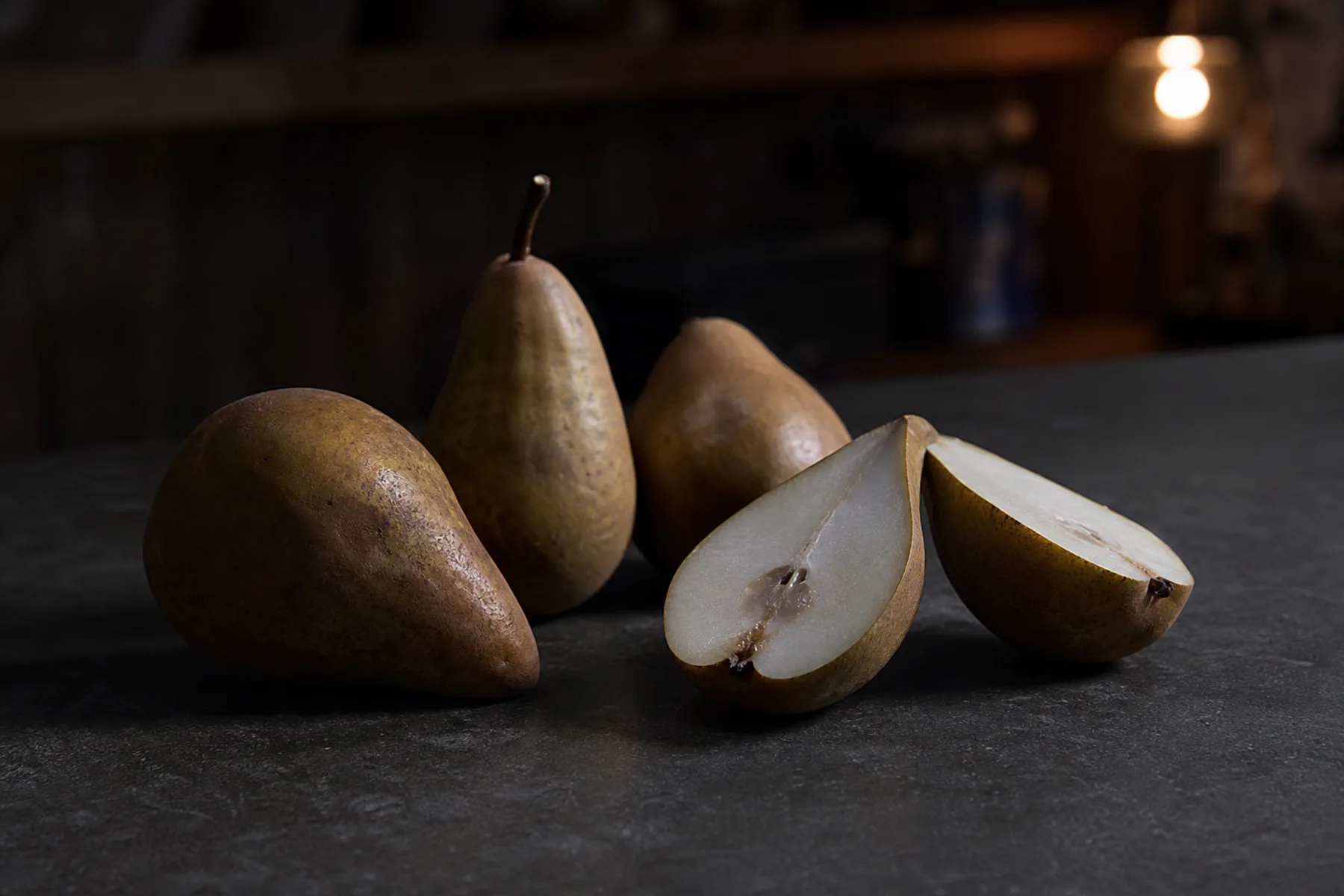
Perry is not cider made from pears. It is a different drink, made from a different fruit, with a chemistry that behaves differently at every stage — and a body of tradition and vocabulary of its own.
Three differences do most of the work, and they are worth having in mind before anything else on this page.
Described in full
- Shape
- A chain of eight stages top to bottom — perry pears, sweating, milling, pressing, juice, fermentation, maturation, bottling — with a separate branch leaving the juice stage to the right and rejoining at bottling.
- Sweating
- A stage cider does not always need. Perry pears are commonly held after picking until the flesh softens, because most are unpressable when picked hard and lose acid and gain sugar as they sit.
- The sorbitol branch
- Pear juice carries sorbitol, a sugar alcohol. It is sweet on the tongue and Saccharomyces cannot ferment it, so it passes through the whole ferment untouched and arrives in the bottle intact.
- What that means for the finish
- A perry can therefore taste distinctly sweet while being fully fermented and carrying no fermentable sugar at all. The same drink is dry by measurement and sweet by taste.
- Pressing
- Pear pomace is more slippery than apple pomace and can slump in a press, which is one reason rack-and-cloth and bladder presses are favoured for perry.
- Bottling
- Because the residual sweetness is unfermentable, a bottled perry is more stable against refermentation than a back-sweetened cider carrying the same perceived sweetness.
Why perry is its own thing
Sorbitol.
Pears carry substantial quantities of sorbitol, a sugar alcohol that Saccharomyces does not ferment. A perry fermented completely dry therefore retains a sweetness a cider never can — and its gravity stays higher, so a finished perry can read as though sugar remains. A stable reading, not a low one, is what shows it has finished. Sorbitol.
Citric acid.
Pears carry citric acid alongside malic; apples have almost none. Lactic bacteria can metabolise citric acid, which is one route to the instability perry has a reputation for — and a total-acid figure does not distinguish the two. Citric acid.
Tannin that behaves differently.
Perry pear tannin tends to read as more astringent and less bitter than apple tannin at the same measured level, so the classification label predicts the palate less reliably than it does for cider fruit.
Each of those three changes what a maker does, not only what the drink is. Making perry is the step-by-step version — the ripeness window measured in days, the pectin, and the gravity arithmetic that does not carry over from cider.
Poiré is the French word and names a tradition of its own, centred on the Domfrontais. “Pear cider” is a commercial term with no separate legal status from perry; the distinction people draw between them is a claim about how a particular product was made rather than a difference the words carry. CiderHQ records the dispute rather than taking a side — see the comparison.
The fruit
90 perry pear cultivars. Almost all English or Welsh, from a belt running through Gloucestershire, Herefordshire, Worcestershire and Monmouthshire, with a French group from the Domfrontais alongside.
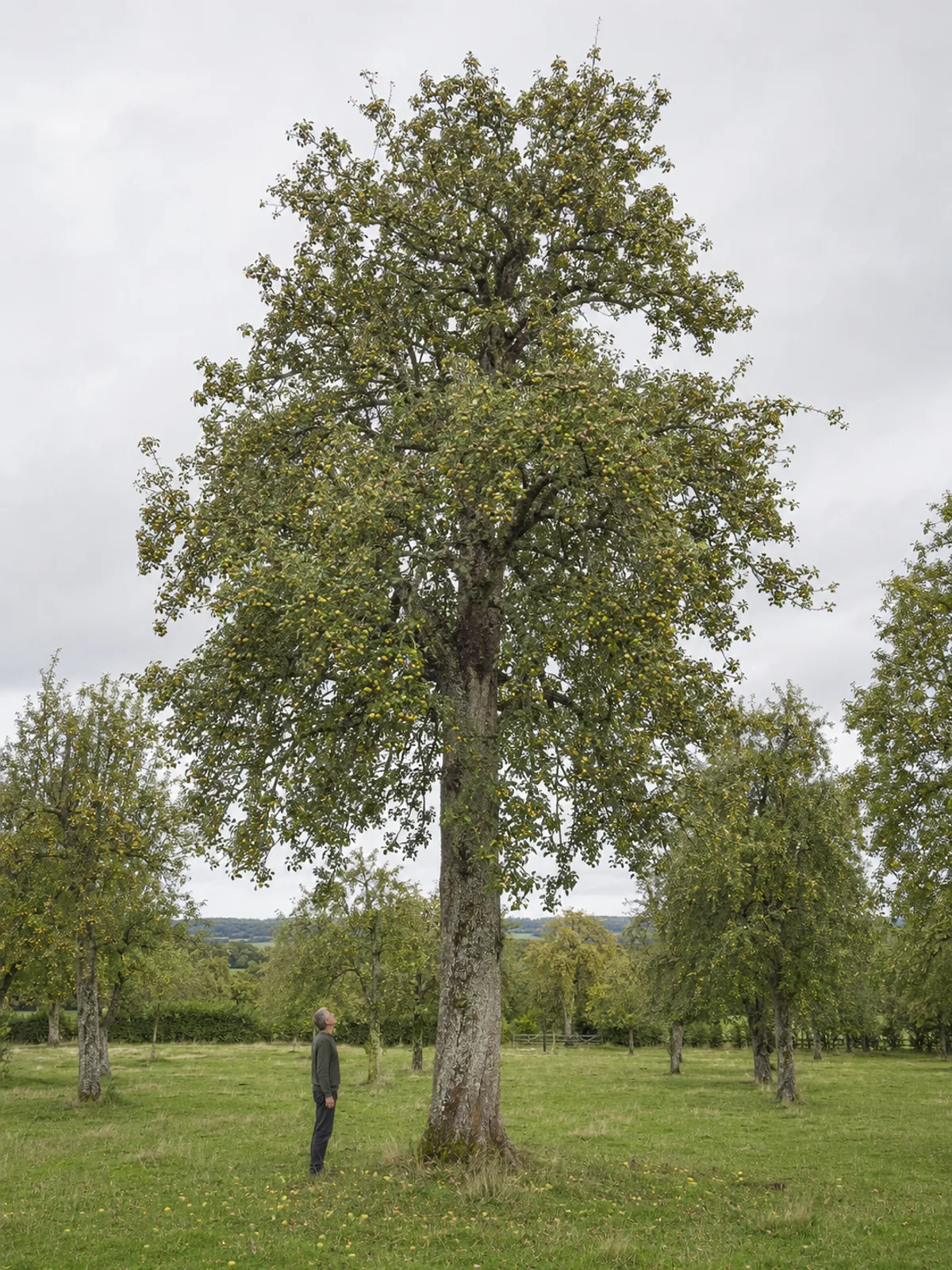
Perry pear trees are the other half of the story. A standard perry pear can reach fifteen metres and live for two or three centuries — many of these cultivars survive as a handful of veteran trees, and several came within a few of being lost entirely. Planting one is a decision whose return arrives for somebody else.
Styles of perry
Ice perry
Perry made from pear juice concentrated by freezing, in which the fruit’s unfermentable sorbitol adds to the residual sweetness the arrested ferment leaves behind.
Poiré Domfront
The controlled appellation perry of the Domfrontais in southern Normandy, made predominantly from the Plant de Blanc pear on high-standard trees and finished sweet, low in alcohol and bottle-conditioned.
Mostviertel Birnenmost
Austrian pear Most from the Mostviertel, made from the region’s tannic standard-tree perry pears, in which sorbitol leaves a soft sweetness no fermentation removes.
Perry
The fermented drink of pears, a tradition parallel to cider rather than derived from it, in which unfermentable sorbitol leaves a sweetness the maker never chose.
Poiré
French perry, made chiefly in southern Normandy and Maine from local perry pears, characteristically sweet, low in alcohol and firmly sparkling.
Still perry
Perry without carbonation, in which the fruit’s sorbitol sweetness and its texture carry a drink that has no bubble to lean on.
Sparkling perry
Perry carrying a persistent bubble, a presentation that suits pear’s aromatics and residual sorbitol and has a documented history going back to the seventeenth century.
Bottle-conditioned perry
Perry that completes its fermentation in the sealed bottle, generating carbonation and lees character while the fruit’s sorbitol keeps a sweetness the yeast cannot remove.
Where perry is made
Perry is geographically narrow in a way cider is not. Outside the Three Counties, Monmouthshire and the Domfrontais there is very little of it anywhere.
Next
- Perry pears — the cultivars, their classification, and the identity problem that comes with naming fruit after parishes.
- Cider compared with perry — the differences set out side by side.
- Making perry — the pathway version, written from the fruit rather than adapted from the cider process.
- How it is made — perry shares most of cider’s processes and diverges at pressing and at bottling.
- The history of perry — a parallel story to cider’s, and a much closer-run one.